
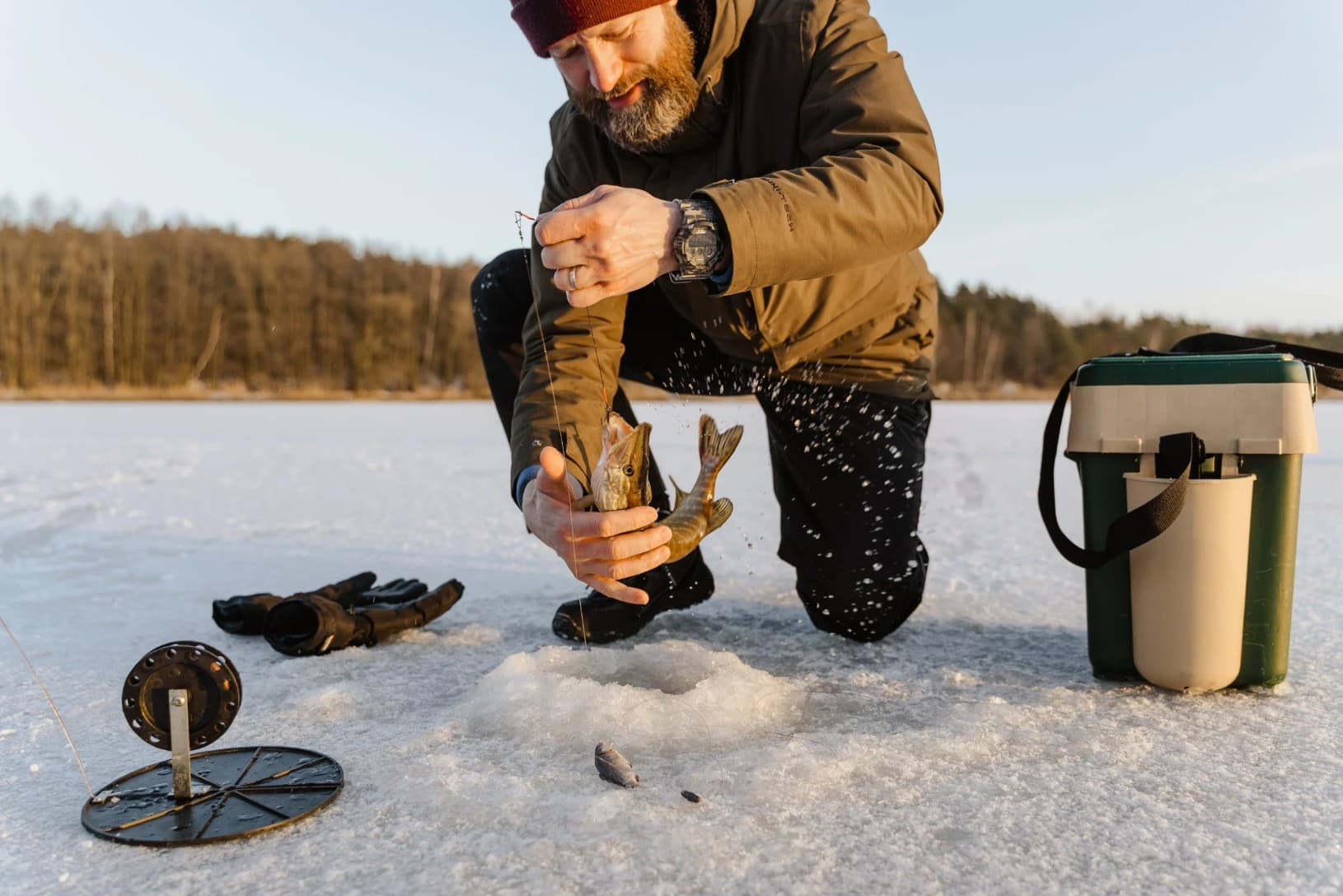
Ice fishing in Finland - The ultimate guide
Minus 15 degrees. A small hole in the ice. A thin line leading into the dark. And that strange silence that you only know on a frozen lake - just before the rod twitches.
Ice fishing is not a niche activity in Finland. It is national culture. Over a million Finns go ice fishing regularly - on the city pond, on remote wilderness waters in Lapland or on the frozen Lake Inari by the light of the Northern Lights. Once you've tried it, you'll understand why.
When is the ice season in Finland?
The ice season is naturally dependent on the weather and therefore varies depending on the region in Finland:
Southern Finland (Helsinki, Tampere): December to March, sometimes shorter depending on the cold.
Central Finland (Saimaa, Päijänne):November to April. Due to its size, Lake Saimaa is often unevenly frozen over - local ice thicknesses should therefore be checked regularly.
Lapland (Lake Inari, Rovaniemi):October to May. This is when the ice cream season is at its longest and the quality of the ice cream is generally the most reliable.
Tip for Lapland: The months from March onwards are particularly recommended, as the days are already much longer and the temperatures are no longer quite so extremely frosty.
Safety rule: Freshly formed ice should be at least 5 cm thick to be safe to walk on. For snowmobiles, around 20-25 cm is required, for cars 30 cm or more. If in doubt, the current ice thickness should always be checked on site.
What bites when ice fishing?
When ice fishing, you can basically catch the same species of fish as in summer. However, there are some species that are significantly more active in winter than others:
Perch:The classic among ice fish. Perch are very active in winter, often gather in large shoals and bite reliably. Ideal for beginners. They are usually caught with small jigs or blade spoons at a depth of 2-10 meters.
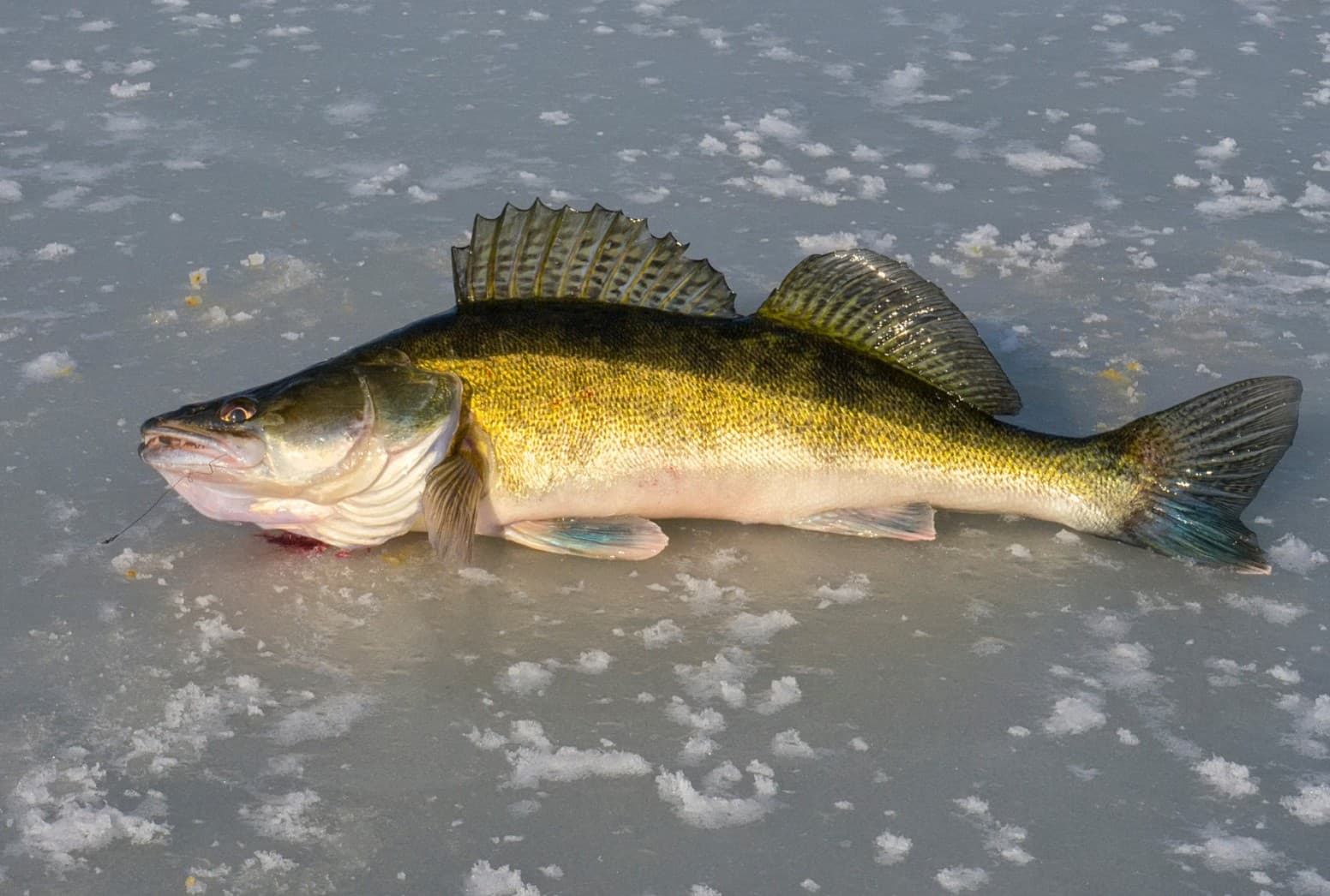
Zander: A little more challenging, but very rewarding. Fishing is mostly vertical with jigs directly above the bottom at a depth of 5-15 meters. Zander are particularly active at dusk and at night. An echo sounder is very helpful when ice fishing for zander.
Pike: Rather slower in winter, but still easy to catch. Live baitfish or large ice jigs are often used. Pike usually stay in deeper areas, but move to shallower zones in the morning and evening to hunt.
Burbot:A real winter fish. While many other species become quieter in the cold season, the burbot is particularly active. It is mainly caught with small baitfish on the bottom.
Grayling: Particularly common in Lapland. It is very active in winter and is considered a high-quality winter catch. Small spoons or light jigs in areas close to the current are effective here.
Char:A sought-after catch, especially in Lake Inari. It is usually found in deeper water (15-30 m) and responds well to small spoons. One of the finest winter fish in Lapland.
Whitefish (vendace): A traditional winter fish, especially in the Saimaa region. It is caught with very light spoons or small artificial flies. Vendace fishing under the ice has a long tradition in Saimaa.
The best regions for ice fishing in Finland
In principle, ice fishing is possible almost everywhere in Finland, provided the ice is sufficiently thick and stable. The local conditions and safety checks on site are always decisive.
Lapland (Lake Inari, Kilpisjärvi, Enontekiö): The Mecca of ice fishing. The ice season is longest here and the ice quality is particularly reliable. The landscape with auroras and endless expanses of snow makes the experience unique. Many remote spots can be reached by snowmobile. The main target species are char and grayling.
Saimaa Lake District: A top area for zander, perch and the rare Saimaa ringed seal salmon (local specialty in the ecosystem). Guided ice fishing tours are particularly popular, often combined with warm drinks and traditional vendace fishing - a centuries-old fishing tradition in the region.
Tampere region: Ideal for beginners to ice fishing. Here, good accessibility meets very productive waters. The focus is on zander and pike. The combination of experiencing nature in the morning and city life in the afternoon is particularly attractive.
Kuusamo (Ruka): Perfect for a combination of winter sports and ice fishing. The surrounding lakes are particularly good for catching perch and whitefish. Particularly suitable for families and mixed travel groups who want to combine various winter activities.
Equipment: What you need
In principle, the equipment should always be adapted to the fishing method - this is especially true when ice fishing. A 240 cm long spinning rod is rather unwieldy at the ice hole, and ice drilling should not be underestimated with this method either. Above all, protection from icy temperatures is crucial: both the clothing and the seat or surface should reliably keep out the cold for a long time.
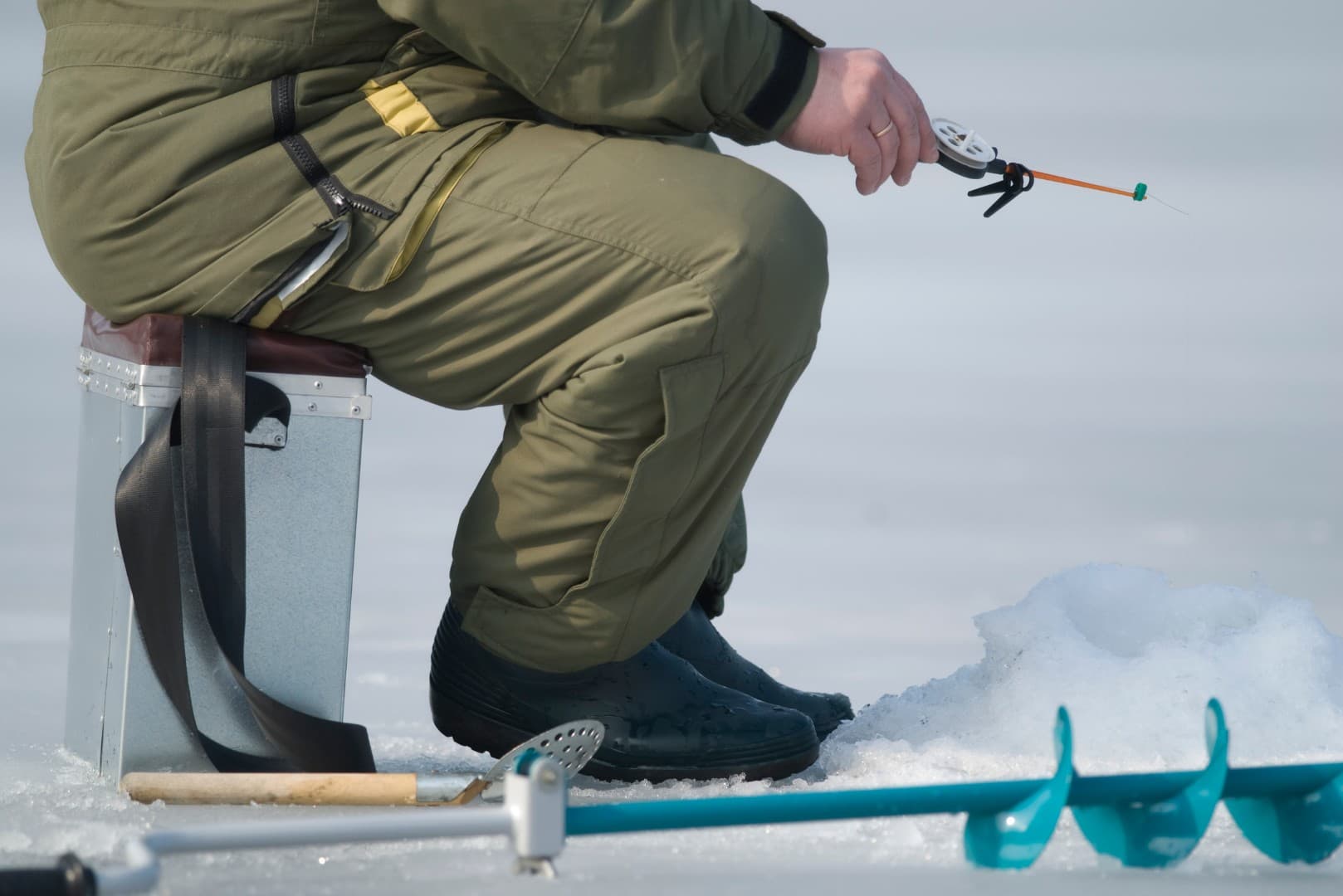
Ice fishing equipment:Ice fishing rods are short (approx. 25-50 cm), light and have a very sensitive tip to reliably detect bites even under the ice cover.
Ice auger: A manual ice auger is sufficient for occasional anglers. If you are out and about more often, it is better to use a motorized auger to save time and energy.
Seating possibility: Simple buckets, foldable chairs or special ice fishing tents are suitable for longer sessions. Many Finns also use reindeer skins as insulation against the cold. These not only offer protection from the icy ground, but also allow you to lie flat on the ice and look directly through the hole into the water.
Clothing: Waterproof winter boots (rated to at least -30 °C), warm layered clothing, waterproof gloves, hat and scarf are mandatory. It is much colder on the ice than in the city, and the cold is often underestimated.
Security:Anyone who breaks into the ice while ice fishing is in a life-threatening situation. The extremely low water temperatures make it difficult to save yourself. This is why ice picks are often worn, which are fastened around the neck. In an emergency, they can be hammered into the ice to pull themselves out again.
Additional equipment: An echo sounder and an ice scoop are very helpful for using the fishing spot efficiently.
Important: In Finland, almost all equipment can be rented or bought locally. Many guides provide all the equipment. So if you just want to try out ice fishing, there is no need to buy expensive special equipment.
Fishing license for ice fishing
Good news: ice fishing under the Everyman's Right is permitted in Finland free of charge and without a license. Those who use special jigs and blade spoons with moving parts require a state fishing license. Simple fishing (with float and hook) is, as always, free of charge.
Ice fishing with a guide or alone?
A local guide is highly recommended for first-time visitors. Guides know the current ice thickness, the best spots depending on the season and usually provide all the equipment.
Many providers also organize half-day tours or guided ice fishing events for guests - often including hot coffee and grilled sausages directly on the ice. This makes ice fishing not only safer, but also an authentic nature experience.
Accommodation & Arrival
For ice fishing tours in Lapland, we recommend a direct flight to Rovaniemi or Ivalo. From there, continue by rental car or shuttle to your accommodation. Many remote lodges are only accessible by public transport to a limited extent, so flexible onward travel on site is important.
Helsinki is the ideal starting point for the Saimaa region and the area around Tampere. From there, you can travel comfortably by rental car to the respective fishing areas.
Early booking of winter accommodation in Lapland is highly recommended. Particularly popular lodges are often fully booked months in advance, as the season is in high demand and capacity in remote regions is limited.
Frequently asked questions (FAQ)
Do I need experience for ice fishing? No - ice fishing for perch is very beginner-friendly. With a guide, you can learn what you need to know in half a day.
Can you really catch salmon while ice fishing? On Lake Saimaa - yes, rarely but possible. On Lake Inari and in Lapland, char and grayling are very realistic under the ice.
When should I plan an ice fishing trip to Finland? January and February are ideal for Lapland - best ice quality, most auroras, longest twilights for active fish, but from March onwards the temperatures get nicer and the days longer. For Saimaa and Tampere, March and April are more pleasant (longer days, still stable ice).